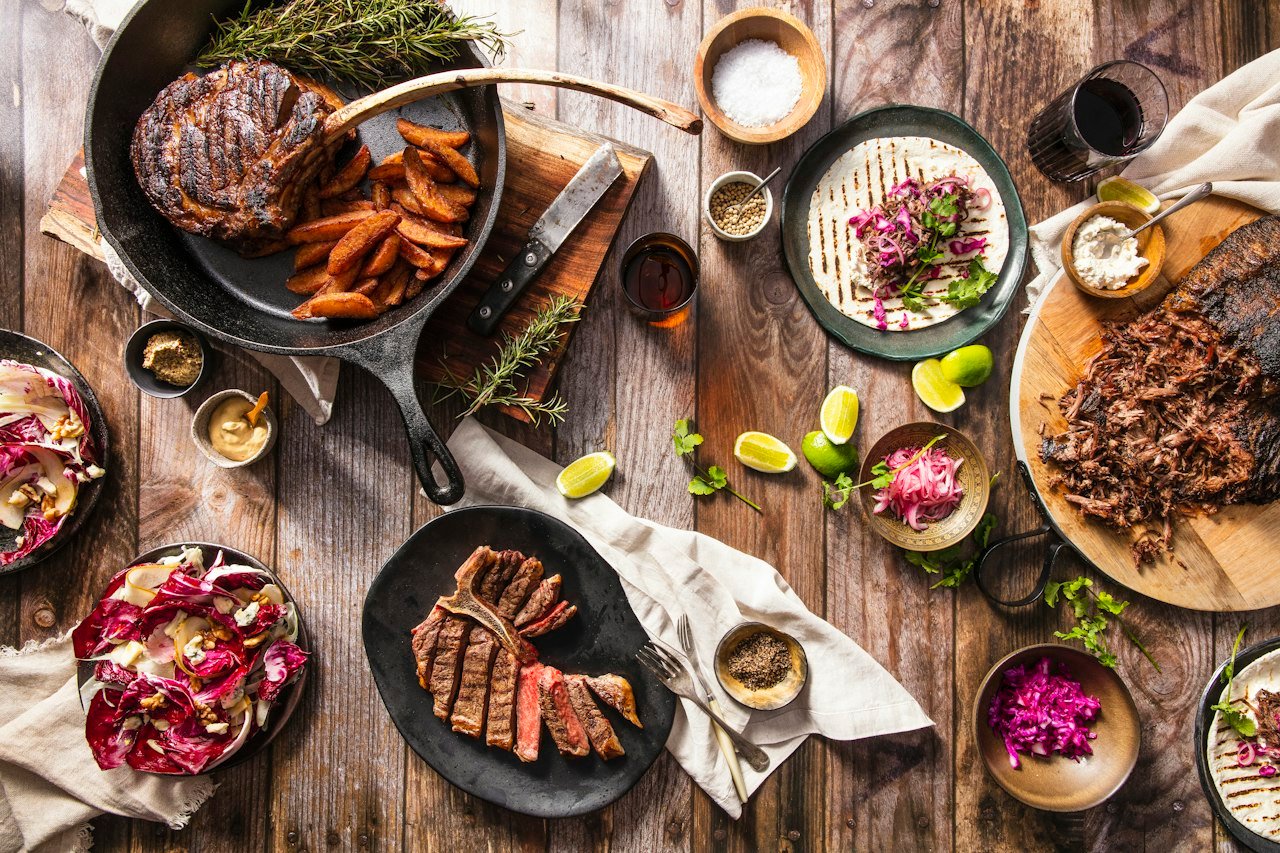
Walk past our open kitchen and you'll see a glass-fronted cabinet glowing pink with Himalayan salt bricks. Inside, whole bone-in ribs hang in still, cold air for six weeks. It looks simple. It's anything but.
What dry-ageing actually does
Two things happen as beef ages. Moisture slowly evaporates, concentrating flavour, and the meat's natural enzymes gently break down muscle fibres, making it more tender.
Past about 30 days, flavours develop that are hard to describe until you taste them: nutty, savoury, a little like aged cheese or brown butter.
Why salt, and why 45 days
The salt bricks help regulate humidity and keep the air clean. We tested everything from 21 to 90 days and found 45 to be the sweet spot for our grill: deep flavour without the funk overwhelming the beef.
- Temperature held at 34–36°F
- Humidity around 80%
- Constant, gentle airflow
- Whole sub-primals only — never individual steaks
From chamber to charcoal
After ageing, we trim the dark outer crust (it goes into our stock pot) and cut steaks to order. They cook over binchotan, which burns hot and clean, then rest under bone-marrow butter.
“Ageing gives you flavour. Fire gives you crust. Resting gives you patience back.”
How to order it
We recommend medium rare so the fat has time to render while the centre stays juicy. If you prefer it cooked more, tell us — our job is to cook it the way you love it.