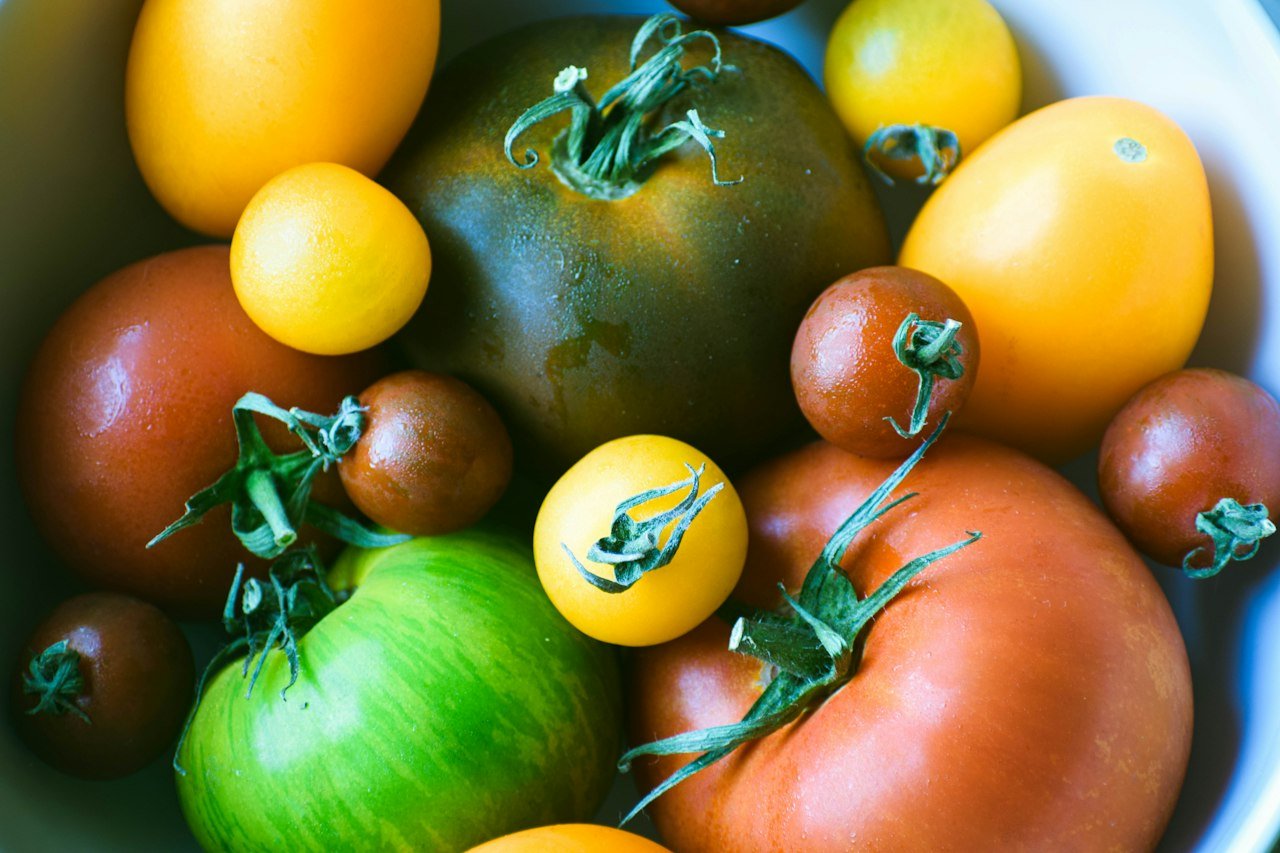
The first heirloom tomatoes arrive in late July, wrapped in newspaper in crates that smell of green leaves and warm soil. For the next twelve weeks, they become the most important ingredient in our kitchen.
Why heirloom?
Heirloom varieties are open-pollinated and passed down for generations. They're less uniform than supermarket tomatoes and they bruise easily — but they taste extraordinary, with real sweetness, acidity and perfume.
Growing for flavour, not shipping
Our farm partners pick when the fruit is fully ripe, not days early to survive a truck journey. That means shorter shelf life and smaller margins, which is why we commit to buying the whole crop every season.
- Brandywine for big, meaty slices
- Green Zebra for brightness
- Cherokee Purple for depth
- Sungold cherries for pure sweetness
How we cook with them
Mostly, we don't. The best tomatoes are seasoned with salt, left for twenty minutes to release their juices and served with good olive oil. Anything that isn't perfect goes into our velouté, roasted slowly for three hours.
“A perfect tomato needs salt, oil and confidence. Nothing else.”
When the season ends
When the first frost arrives, so does the last crate. We preserve some as passata for winter pizzas — and the rest of the year, we wait.